Picture the hour before sunset on Capitol Mall: the glass towers catch the last amber light, the Golden 1 Center hums with the energy of a downtown that has learned to feed itself well, and somewhere between the weekly farmers' market and the river, a chef is unpacking heirloom tomatoes still warm from the field. Sacramento does not apologize for calling itself the Farm-to-Fork Capital of America. It has earned the title. The city sits in the most productive agricultural region on the planet, and its restaurants, caterers, and home cooks enjoy access to ingredients most cities can only import at a premium.
But walk the length of that farm-to-fork narrative and you will notice what is missing. For all the celebration of California cuisine, of Italian pastas and French techniques, of the wine country's gravitational pull, there is a conspicuous absence. Where is the African influence? Where is the Caribbean? Sacramento's "farm-to-fork" story, for all its bounty, has been told largely through a Eurocentric lens — as though the only cuisine worthy of the valley's produce is the one that traces its lineage to Provence or Tuscany.
Afroboujie's answer is simple and radical: merge the best of the valley's produce with the soul of West Africa and the Caribbean. The result is a catering experience that doesn't ask guests to choose between refinement and heritage — that treats Afro-Caribbean cuisine as the fine dining it has always been capable of becoming, and treats Sacramento's fields as the pantry they were always meant to be.
Sacramento's Culinary Evolution
To appreciate what Afroboujie is doing, it helps to understand how Sacramento's dining scene arrived at this moment. The Michelin Guide's expansion across California has turned fresh attention to the capital, spotlighting restaurants that had long been the city's quiet pride. The Kitchen Restaurant — where guests sit at a counter and engage directly with chefs across a multi-course performance — set the regional standard for theatrical fine dining. The Waterboy, with its Midtown warmth and Mediterranean-Californian menu, proved that a neighborhood restaurant could hold its own against anything in the Bay Area. These institutions established a floor: Sacramento would no longer be a culinary afterthought to San Francisco.
Within that rising tide, Black-owned catering companies have also carved space. Black Hat Catering Company built a reputation for soul food done right, and the Sacramento Catering Collective has helped organize and professionalize independent operators. Their success matters. But a gap remains: the absence of Afro-Caribbean fine dining — cuisine that reaches beyond the soul food canon into the wider diaspora, that plates Jollof with the same reverence a French kitchen plates risotto, that treats curry as a technique worthy of a tasting menu.
Afroboujie is distinct precisely because it is not just soul food. It is a global culinary journey, one that draws a line from Accra to Kingston to Sacramento and insists that every stop along the way deserves a place at the fine-dining table. Soul food is heritage, and Afroboujie honors it — but the diaspora is wider than any single tradition, and the menu reflects that width.
The Afroboujie Catering Menu, Deconstructed
The Appetizers
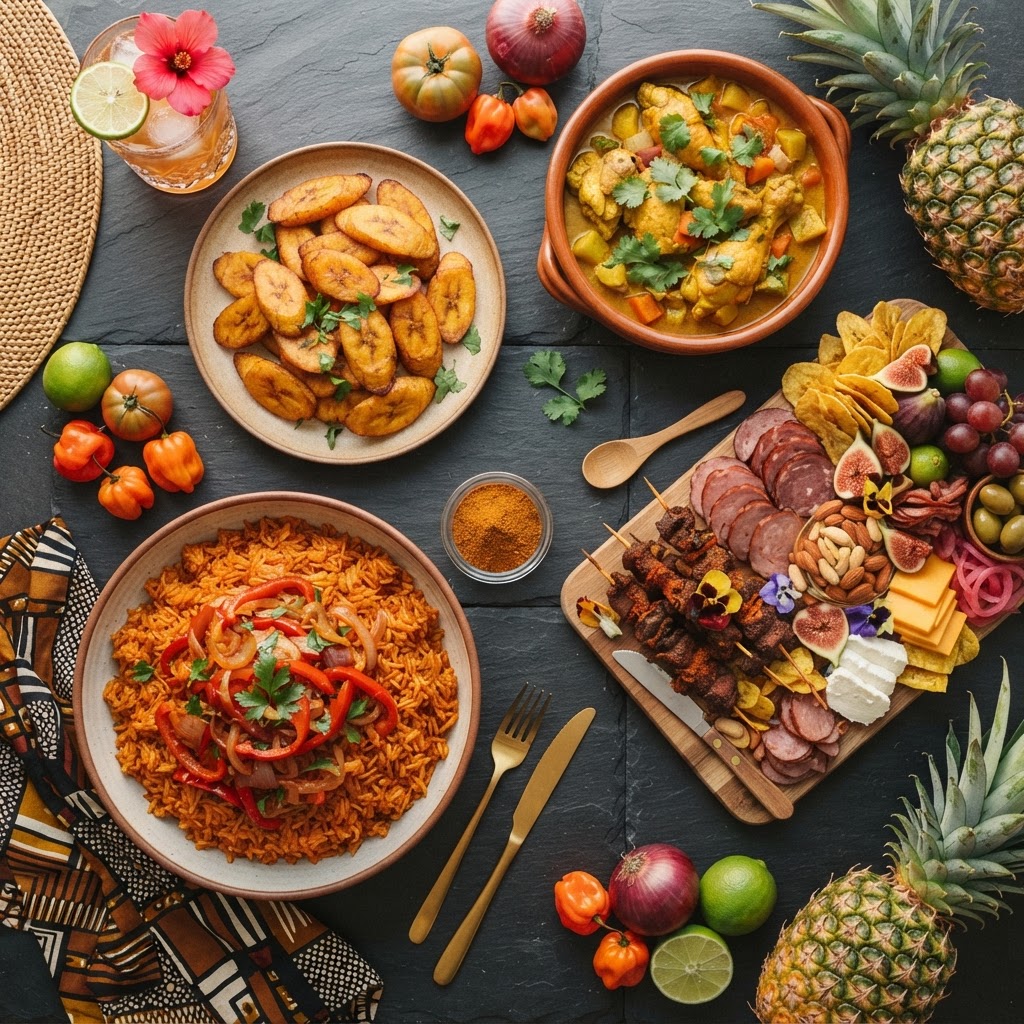
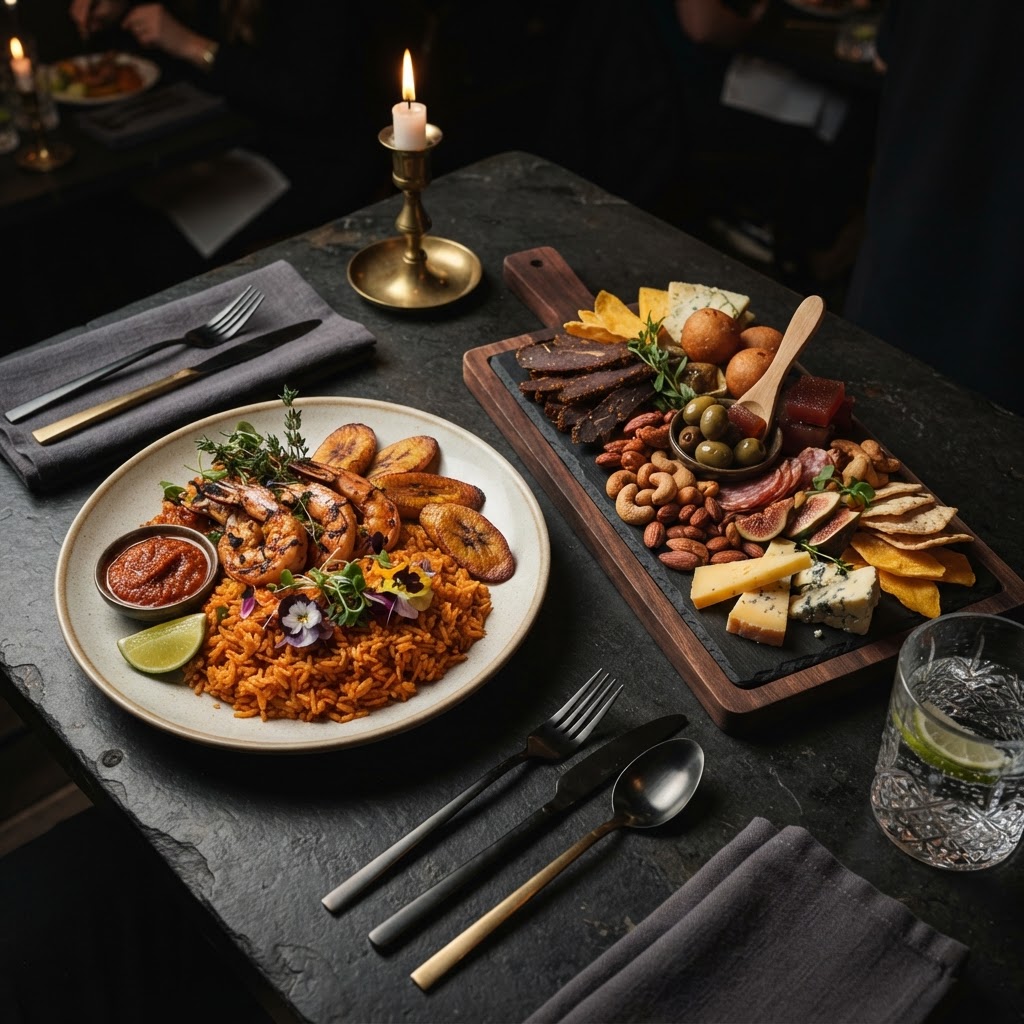
The first impression matters, and Afroboujie's Afro-Caribbean-infused light hors d'oeuvres are engineered to reset expectations from the first bite. Picture plantain cups — thin, crisp shells of green plantain pressed into molds and fried golden — filled with spiced shrimp in a scotch bonnet aioli that lands heat and sweetness in the same breath. Picture coconut shrimp with a mango chutney that balances the richness of the coconut crust against the acid of green mango. Picture kelewele-inspired spiced fried plantains — the beloved Ghanaian street food — reimagined as a refined bite, the ginger and clove and anarmor of caramelized edges served on a small plate that would not be out of place in a tasting menu.
Then there is the charcuterie table, and this is where Afroboujie's cultural intelligence becomes unmistakable. The European charcuterie standard — cured meats, aged cheeses, crusty bread — is respected, not abandoned. But alongside the manchego and the prosciutto, Afroboujie adds spiced nuts warmed with suya seasoning, dried mango and papaya for color and sweetness, biltong for a South African protein, and suya-spiced beef skewers that bring the smoky, peanutty heat of Nigerian street food into a context that feels entirely at home next to a glass of wine. The board tells a story of two worlds that have always had more in common than their menus admitted.
The Main Course
The centerpiece of any Afroboujie main course is the Jollof rice — and yes, the team knows exactly what they are stepping into. The Great Jollof Debate, the friendly but fierce rivalry between Ghana and Nigeria over whose version reigns supreme, is one of the most reliably engaging conversations in diaspora food culture. Afroboujie leans into it. The dish is a celebration of West African technique: long-grain rice simmered in a deeply reduced tomato-and-pepper stew, each grain distinct and stained red, carrying the smoky undertone that only a high-heat finish can deliver. Served at an Afroboujie event, it becomes a conversation starter — a way to connect guests from different parts of the diaspora over a shared love and a good-natured argument.
Alongside the Jollof, the curry chicken and the palau with chicken carry the Caribbean thread. These are dishes rooted in the indentured and enslaved culinary cross-pollination that shaped the islands — the use of allspice and scotch bonnet, the fresh thyme, the slow braise that lets the spice penetrate the meat and the grain. The palau, with its caramelized chicken and golden, fragrant rice, is a study in restraint and depth: sweet, savory, and warming without ever becoming one-note.
The farm-to-fork twist is not a marketing flourish; it is a method. Afroboujie sources local heirloom tomatoes for the stew base — the same tomatoes that make Sacramento's Italian sauces sing — because their acidity and sweetness give the Jollof a brightness that canned tomatoes cannot. The curry chicken relies on local organic poultry, the kind raised without compromise, because a clean protein lets the spice do the talking. This is the point where the valley and the diaspora meet on the plate, and it is where Afroboujie's thesis becomes literal.
The Desserts
Dessert is where tradition meets modernity. A rum cake made with local honey, dense and boozy and faintly floral, offers the comfort of a Caribbean kitchen reimagined for a gala. A coconut flan, built on the cream of local dairies, balances the custard's richness against the tropical sweetness of coconut, its caramel top glistening under the event lighting. These are desserts that feel like memory and taste like invention.
The One Love Festival & Cultural Connection
To understand why this cuisine resonates in Sacramento, look to the One Love Festival — the region's premier Afro-Caribbean celebration, which marks ten years in 2026. The festival draws a massive, multi-ethnic audience to celebrate the food, music, and culture of the diaspora, and the dishes that anchor it are familiar: Jollof, curry chicken, palau. Their prominence at One Love proves that this cuisine is not niche in Sacramento — it is beloved, it is crowd-pleasing, and it carries cultural weight that a generic catering menu cannot touch.
Afroboujie positions itself as the premium expression of this cuisine — the version you hire when the stakes are high, when the guest list includes people who have eaten at the best tables in Lagos, London, and New York, and when the food needs to be as memorable as the venue. One Love is the festival; Afroboujie is the VIP experience. One Love is the joy of the crowd; Afroboujie is the intimacy of the curated dinner. Both matter, and the ecosystem is richer for having both.
Catering for the "Boujie" Wedding & Corporate Event
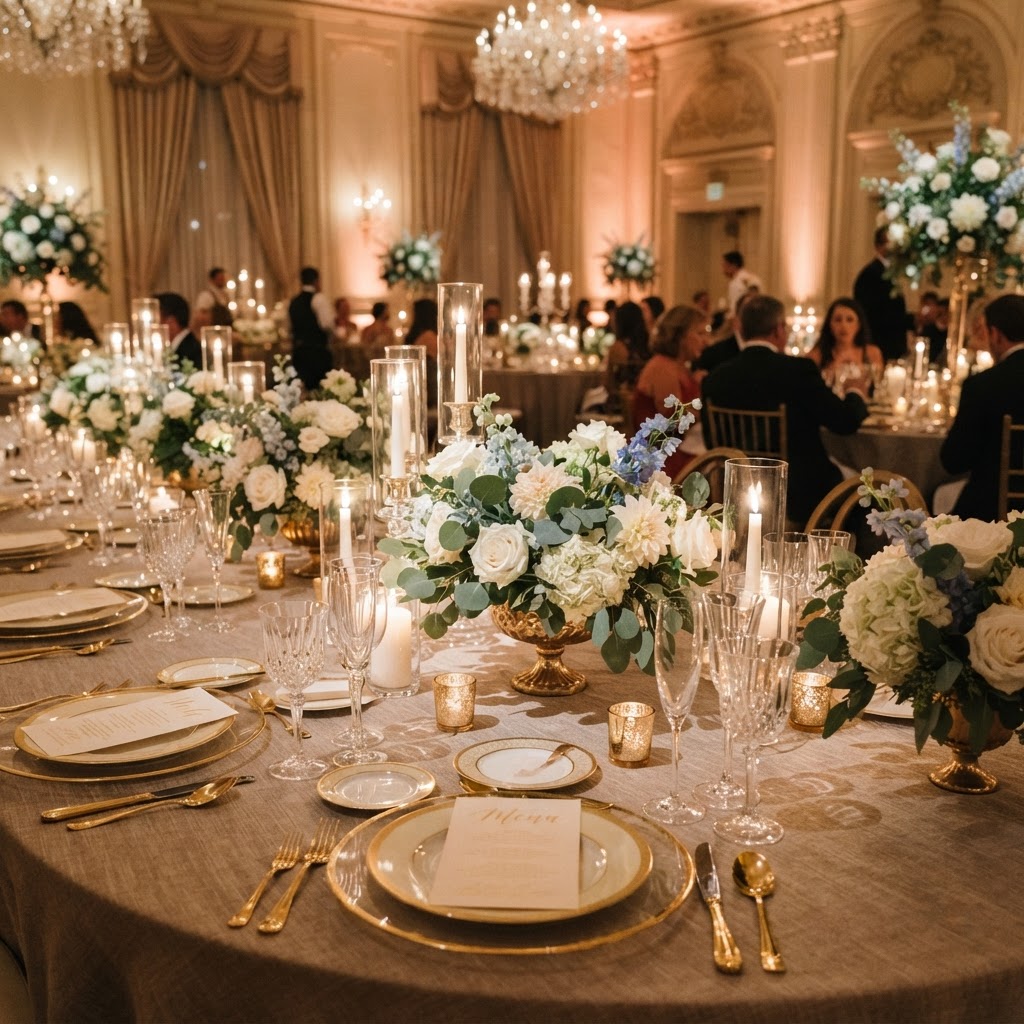
The demand for "fusion food" at weddings has grown sharply, and for good reason. Today's couples are more likely than ever to come from different cultural backgrounds, and the menu has become a way to honor both lineages without one overshadowing the other. Afroboujie offers a tasting menu experience for brides and grooms — a private session where the couple samples a curated progression of dishes, adjusting spice levels, presentation, and pairings until the menu feels like an edible extension of their story. The result is a wedding meal that guests remember not for its novelty but for its intention.
For corporate events, the calculus is different but no less powerful. A Bay Area tech company hosting clients from Los Angeles, a Sacramento firm impressing East Coast partners, a nonprofit gala seeking to signal cultural sophistication — all of them benefit from a menu that does more than fill plates. Afroboujie's catering adds an element of cultural sophistication that a standard filet-and-salmon dinner cannot. It sparks conversation. It signals that the host thinks globally. It leaves an impression that outlasts the keynote. In a city that increasingly competes for business against larger markets, that edge matters.
The Plate as Proof
Sacramento's food scene, for all its well-earned praise, is incomplete without the diaspora at the table. Farm-to-fork cannot be a complete identity if the fork only reaches one tradition. Afroboujie is closing the gap — not by displacing the existing scene but by expanding it, by proving that the valley's produce is generous enough to hold West African stews and Caribbean curries alongside its Italian pastas and French reductions.
The invitation is to taste the difference. Book a catering tasting and experience the progression from plantain cup to Jollof to rum cake. Or inquire about full catering for your next upscale event — a wedding, a corporate dinner, a milestone celebration — and let the menu do what a great menu does: tell a story your guests can eat. Sacramento has always had the ingredients. Now it has the kitchen to match.