Sacramento earned its title as the Farm-to-Fork Capital of the World honestly. The region's farmers markets overflow with heirloom produce grown within an hour's drive, the restaurant scene has drawn Michelin Guide recognition, and the city has built an identity around the conviction that the best food is grown close and cooked with intention. It is, by any measure, a remarkable food city, a place where a tomato is allowed to taste like a tomato and a chef is expected to know the name of the farm. And yet, walk through its celebrated dining rooms and a curious absence becomes impossible to ignore: the vibrancy of West African and Caribbean cuisine, the cooking that fed and shaped a vast portion of the global diaspora, is largely missing from the fine-dining conversation. The flavors that fill the festivals are seldom found on the white tablecloths.
Afroboujie's catering exists to close that gap — to merge the best of the valley's produce with the soul of the Motherland and build an authentic, upscale culinary experience that Sacramento has been waiting for without quite knowing it. This is the story of a kitchen philosophy that treats jollof with the same respect a sommelier treats a vintage, that brings Afro-Caribbean-infused light hors d'oeuvres and a charcuterie table built for VIPs to the same room, and that argues, plate by plate, that the farm-to-fork movement is incomplete until it reaches the continent.
The Afroboujie Catering Menu: A Deep Dive
The menu is the argument made edible, and it rewards the close read.
The Signature Dishes
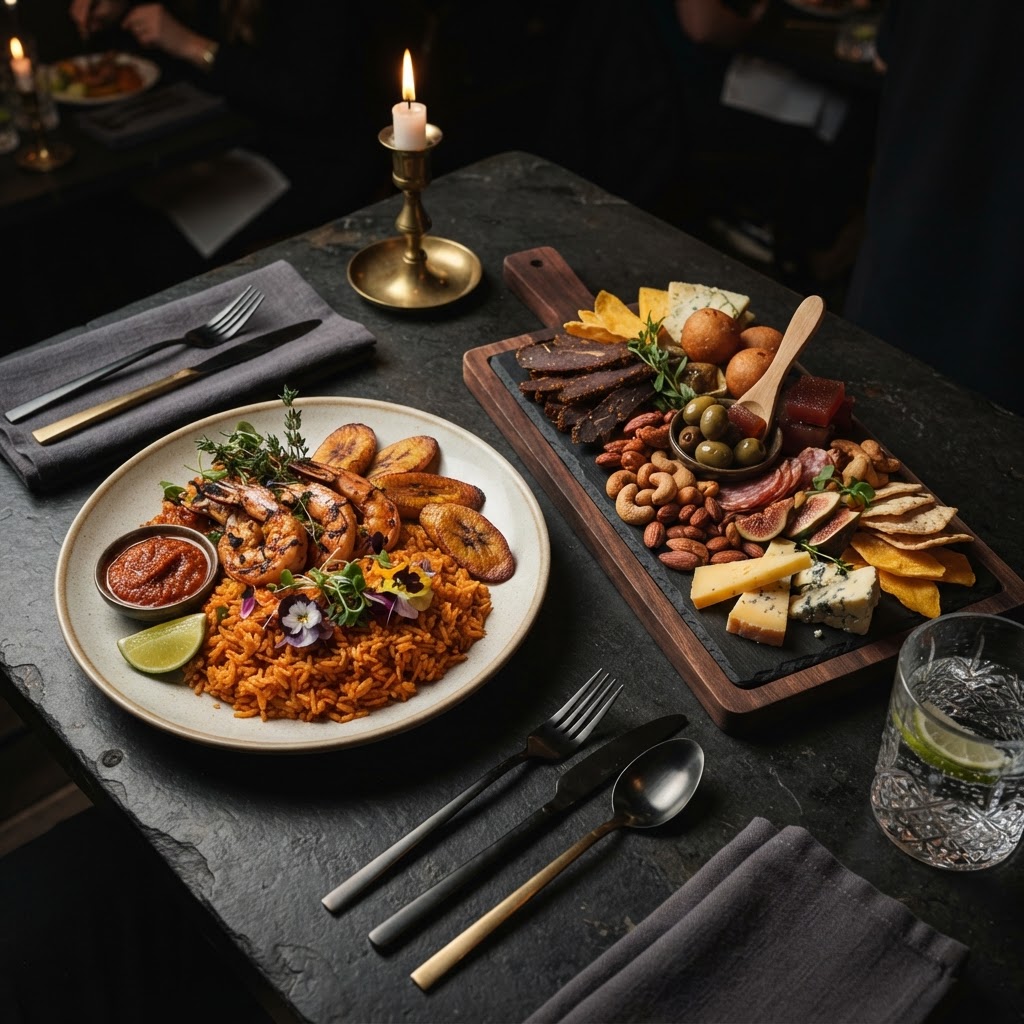
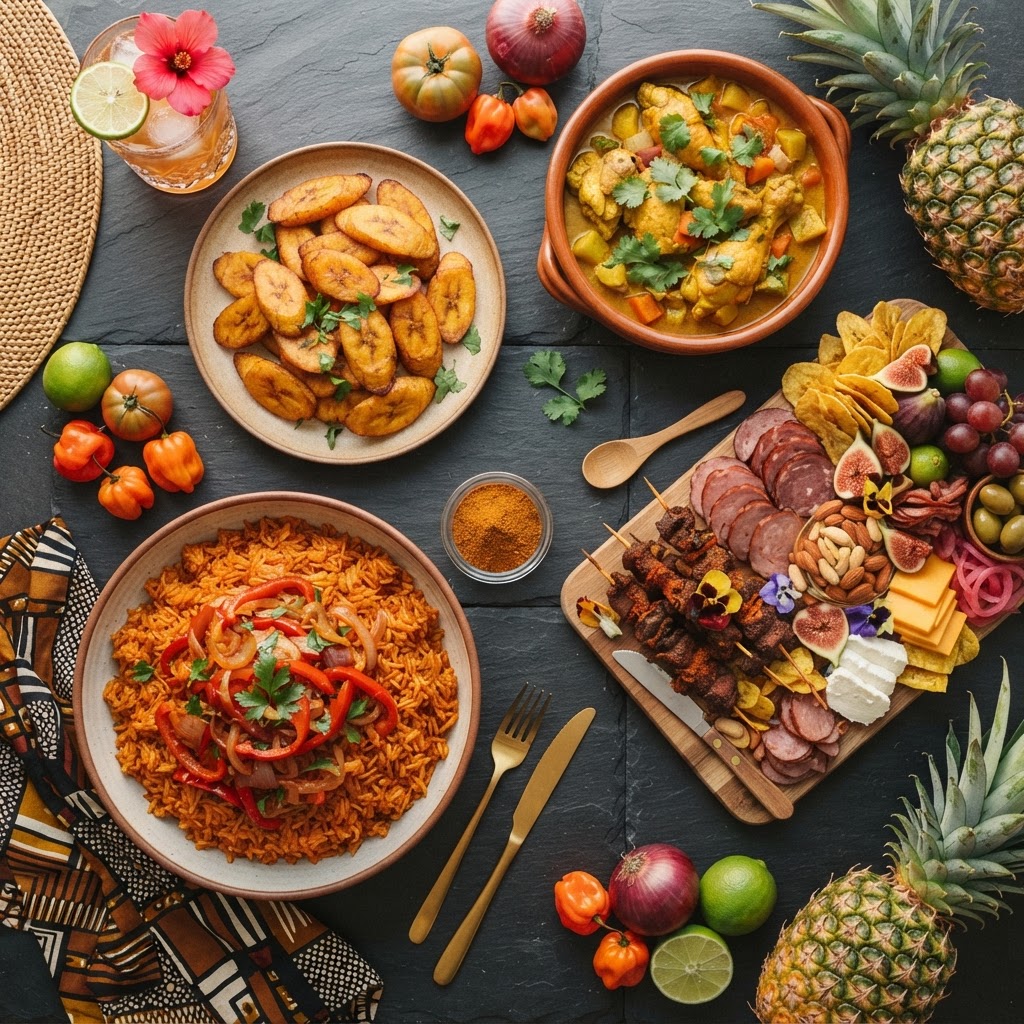
The cornerstone is jollof rice, and Afroboujie serves it the Ghanaian way — a single-grain, smoke-kissed rice cooked in a deeply reduced tomato and pepper base, finished with a caramelized crust the initiates call "the party bottom." To serve jollof in Sacramento is to step, gently, into the most beloved food rivalry in West Africa, the eternal jollof war between Nigeria and Ghana, and Afroboujie's kitchen makes its position clear by virtue of execution. The dish is a litmus test; done well it silences the debate for the duration of the plate. Alongside it, curry chicken in a fragrant, golden sauce that carries the Indo-Caribbean thread of the diaspora's culinary lineage, and palau with chicken — the spiced, slow-cooked rice dish that bridges West African and East African traditions and earns its place on the menu through sheer, aromatic authority. Each dish carries a geography and a history, and the kitchen treats both as part of the recipe.
The Appetizers
The hors d'oeuvres are where the Afroboujie standard first announces itself, because the first bite a guest takes sets the expectation for the entire event. Plantain cups, crisp shells holding savory fillings. Coconut shrimp with a sweet-tart dip. Kelewele-spiced plantains, the Ghanaian street favorite of cubed plantain fried with ginger, cayenne, and anise, elevated into a canapé that is at once familiar and revelatory to a guest who has only known plantain as a side. Each appetizer is engineered to be eaten in two bites, standing, in conversation — the architecture of a great cocktail hour, where flavor arrives without interrupting the room.
The Charcuterie Twist
Then the signature: the VIP charcuterie table. Afroboujie takes the form Sacramento already loves and reinvents it with diaspora accents. Alongside the expected cheeses and the local fruit, spiced nuts warmed with suya seasoning, biltong cured in the South African tradition, and suya-spiced meats threaded onto skewers with the smoky peanut heat that defines West African street grills. The charcuterie table becomes a cross-continental conversation — the valley's cheese beside the continent's spice — and it lands as the kind of grazing station guests gather around and photograph. For a VIP reception, it is the centerpiece that says the host understood the assignment.
The Farm-to-Fork Connection
The philosophy that ties it together is sourcing. Afroboujie sources local heirloom tomatoes for the jollof base, organic meats for the curry and the suya, and seasonal produce from the same regional farms that supply Sacramento's celebrated restaurants. The result is a Californian freshness running through traditional recipes — the flavors of the Motherland expressed through the produce of the valley, a true fusion of place and heritage rather than a reproduction of a dish shipped across an ocean. This is what farm-to-fork meets the Motherland actually means on the plate: not substitution, but synthesis, the cooking of the diaspora given the produce of the valley it now calls home.
The One Love Festival Influence
To understand why this catering lands in Sacramento with such force, look to the festival that has spent a decade proving the demand. The One Love Festival, the region's premier celebration of Afro-Caribbean culture, marks ten years in 2026 — a decade of bringing the music, the dance, and the food of the diaspora to a massive, multi-ethnic crowd that returns year after year. The festival has done the hard cultural work of building an appetite where there was none, and Afroboujie's catering is the premium expression of the appetite One Love created.
The dishes that anchor the festival are the dishes that anchor Afroboujie's menu. Jollof, curry chicken, palau — the same recipes, the same cultural weight — and their prominence at One Love is the proof, at scale, that this cuisine is not niche in Sacramento. It is beloved. The festival draws crowds that reflect the full breadth of the region, and the food lines run all day. There is an audience for this, and it is hungry, and it has been hungry for longer than the fine-dining scene has noticed.
Afroboujie's position is the premium tier of that proven appetite. Where One Love is the festival — the communal, open-air, everyone-welcome celebration — Afroboujie is the catering you hire for the VIPs, the weddings, and the galas. It is the gourmet version of the festival food, the intimate reception where the same jollof that fed a crowd of thousands is plated for a room of fifty. A guest who has danced and eaten at One Love all afternoon and then sits down to an Afroboujie-catered dinner that evening has experienced the full spectrum of what the region offers: the joy of the crowd and the refinement of the curated table, both essential, both rooted in the same cuisine. Afroboujie does not compete with the festival; it completes it, offering the elevated tier of a cultural moment the festival created.
Catering for High-End Events
The menu's full value emerges in the rooms it is built for, and Afroboujie's catering is engineered for three.
Weddings
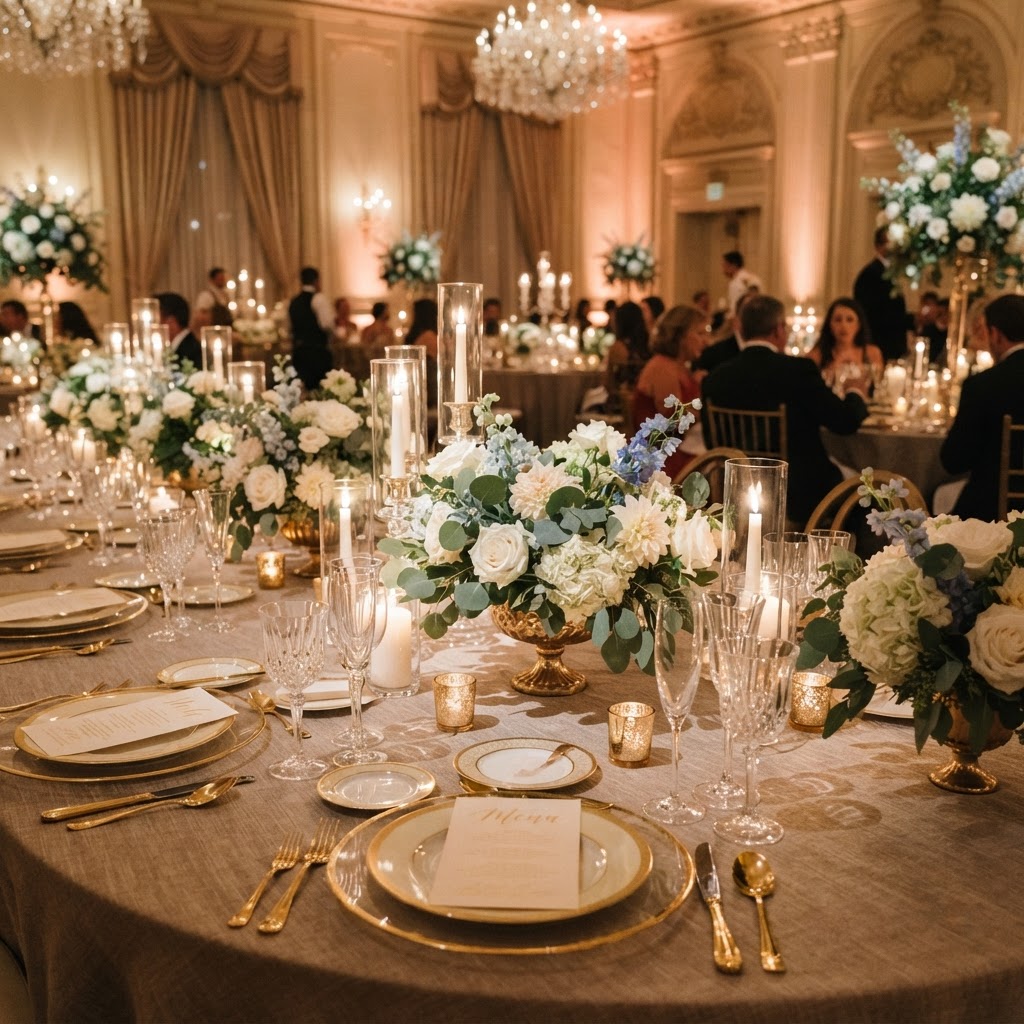
The rise of the cultural fusion wedding is one of the clearest trends in modern celebration, and it is a catering challenge most vendors are not equipped to meet. A couple blending, say, a Ghanaian heritage with a Caribbean one, or an African American family with a Filipino one, wants a menu that honors both lineages without one drowning the other out — and they want it at a standard that matches the rest of the wedding. Afroboujie offers tasting menus that allow the couple to build the arc of the meal the way they build the arc of the day, dish by dish, ensuring every guest finds themselves represented on the plate. The wedding catering becomes another form of the cultural storytelling the company is known for, and the guests remember the meal as they remember the vows.
Corporate Events
For the corporate host, the menu is a signal sent before the first presentation. Catering a stakeholder dinner with authentic Afro-Caribbean cuisine tells a diverse room that the host sees it, and it does so more convincingly than any slide. Afroboujie's corporate catering is built for exactly this — impressive enough to anchor a client appreciation dinner, considered enough to carry a product launch reception, and culturally competent enough to reflect the diversity a modern organization serves. In a region as varied as Sacramento, that competence is competitive advantage on a plate.
Private Parties
For the private host, the full VIP charcuterie table experience is the offer. A milestone birthday, an anniversary, a milestone celebration that deserves more than a catered tray — Afroboujie brings the same standard to a private home as to a hotel ballroom. The charcuterie table becomes the room's anchor, the passed hors d'oeuvres keep the energy moving, and the host gets to be a guest at their own party. That is the quiet luxury of catering done at this level: the labor disappears and only the experience remains.
The Cultural Significance of Food
Beneath the menu and the rooms, there is a conviction worth naming. For Afroboujie, food is a storytelling tool, and the catering program is an extension of the company's broader commitment to championing the true story of our community. A plate of jollof served at a Sacramento gala is not merely a meal; it is an act of presence. It insists that the cuisine of the diaspora belongs in the fine-dining conversation, that the recipes carried across an ocean deserve the same reverence as any other culinary tradition, and that a community is seen, in part, by whether its food is served.
That is why the team treats the catering with the same seriousness as the events. A shared meal is a form of cultural education, and a guest who tastes kelewele for the first time at an Afroboujie reception leaves knowing something they did not know when they arrived — about a cuisine, about a region, about a people. The catering is, in this sense, an invitation. It introduces the diaspora's flavors to guests who may never have encountered them, and it welcomes home the guests who have been missing them. Both leave fuller, and the room is the richer for both being there.
Conclusion: Taste the Motherland
Sacramento's culinary landscape is richer than it knows, and the missing ingredient is the one Afroboujie is now serving. The farm-to-fork capital is, at last, meeting the Motherland, and the result is a catering experience that belongs on the same short list as the city's most celebrated kitchens — built on local sourcing, rooted in diaspora tradition, and delivered at a standard that befits the rooms it is invited into.
The invitation is to taste it. Book a catering tasting, or inquire about Afroboujie's catering services for your next upscale event, and let the kitchen make the argument the kitchen makes best — on the plate, in the room, one unforgettable bite at a time.