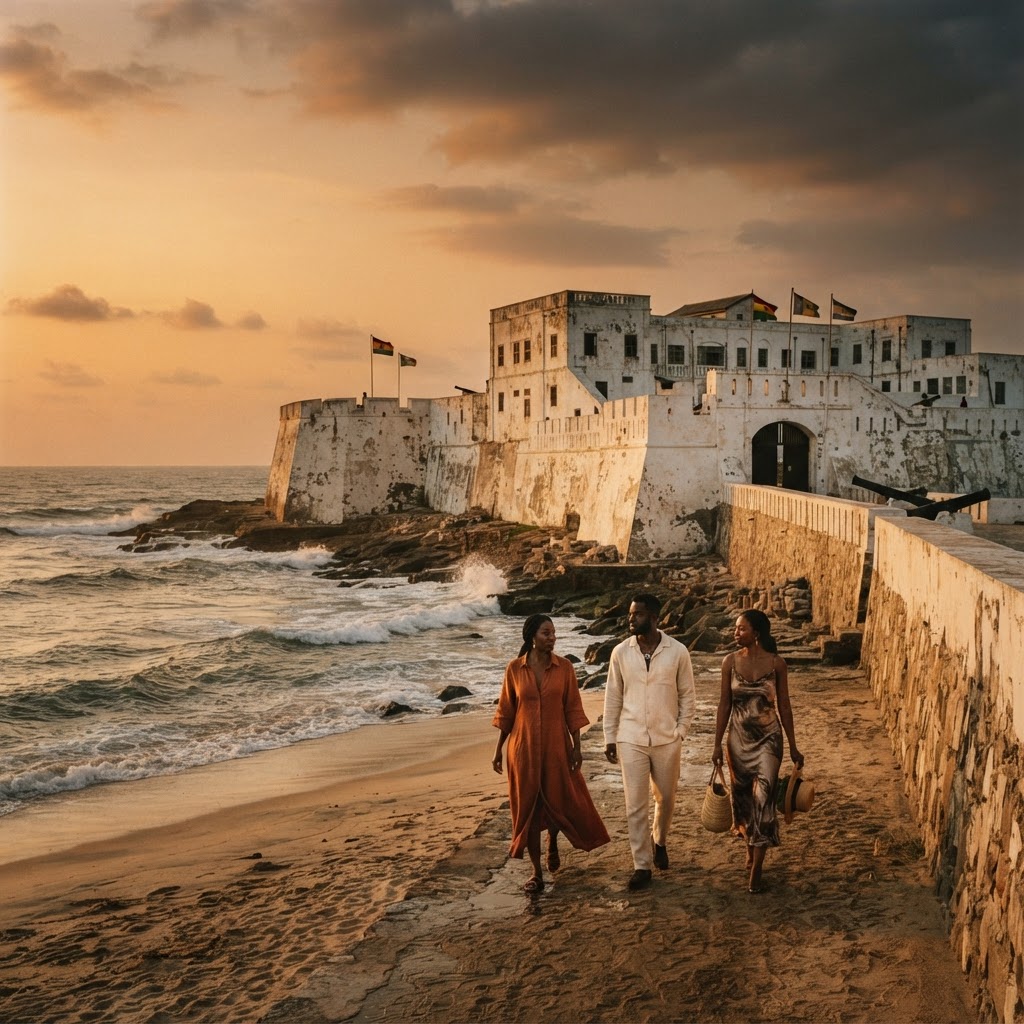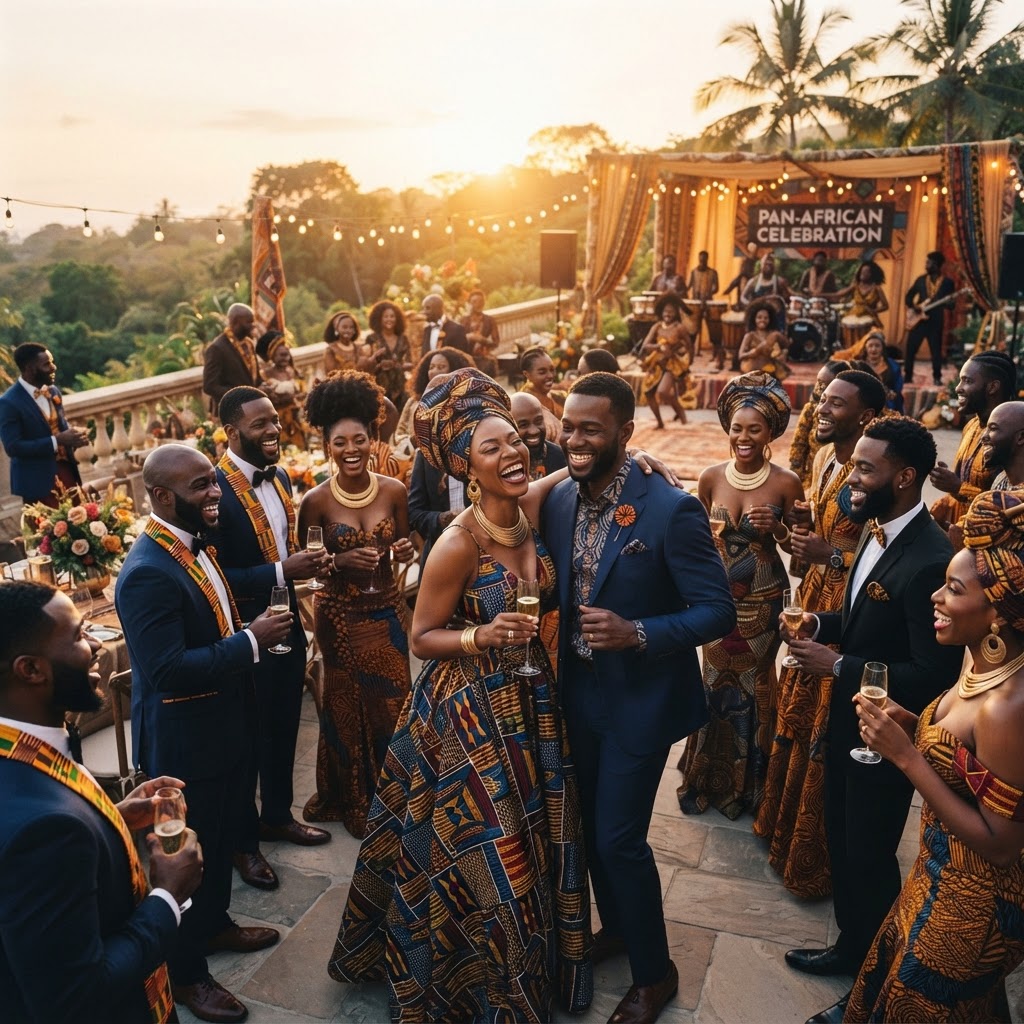
From Rio's Carnival to Trinidad's Carnival, from Ghana's Homowo to New Orleans' Juneteenth, the diaspora knows how to celebrate. These are not parties; they are declarations — joyful, pageant-filled, unapologetic assertions that a people have survived, thrived, and built something worth dancing about. The music is loud because the history is heavy. The colors are bright because the future deserves to be. Wherever the diaspora has gathered, celebration has been the language of resilience.
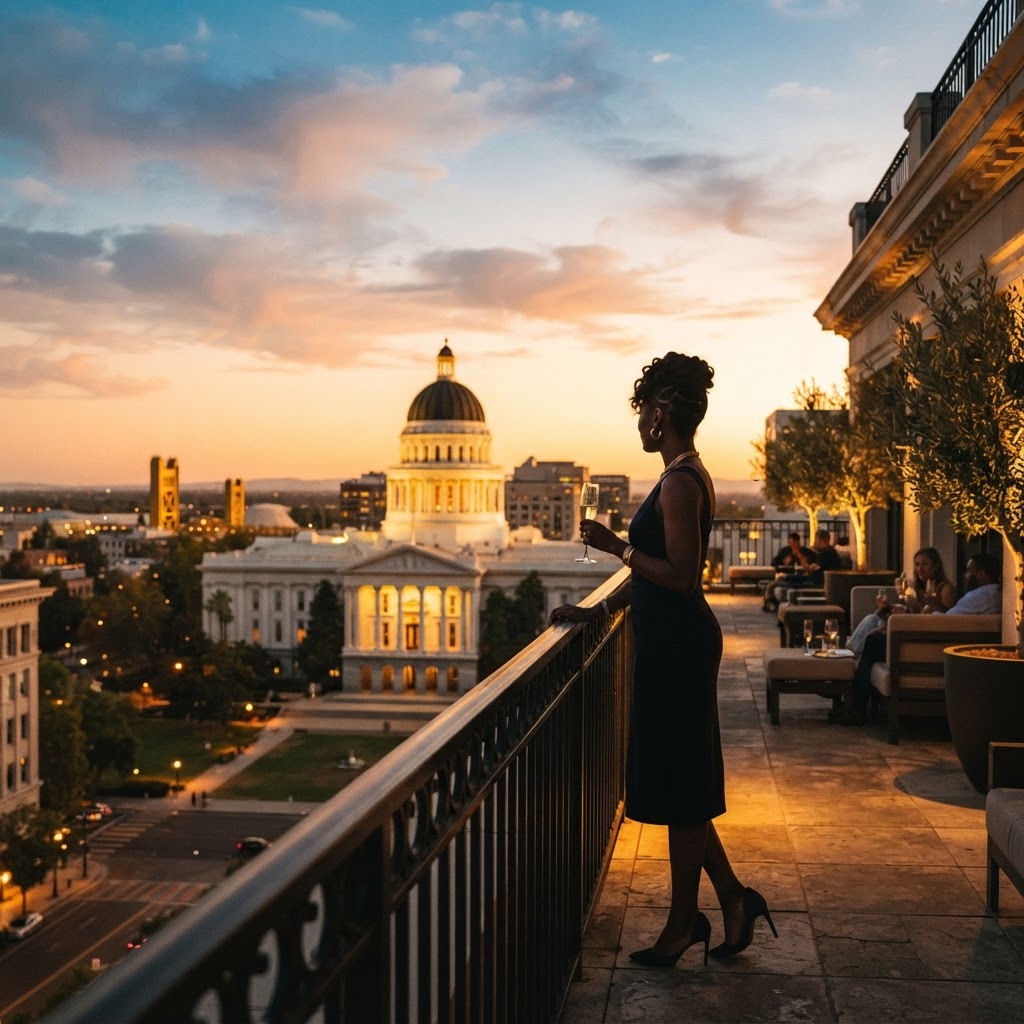
Sacramento has a deeper piece of this story than most travelers realize. The city's Black history runs from the Gold Rush entrepreneurs who built early businesses to the cultural backbone of Oak Park, where community gatherings were the mortar holding neighborhoods together through decades of change. That history is often overlooked in the national conversation, which tends to route Black cultural capital through Atlanta, Harlem, or the South Side. But the history is here, alive, and increasingly celebrated.
Afroboujie's role in this landscape is specific and important. The company is not merely an event planner; it is a cultural institution in the making, preserving and evolving what the team calls "the true story of our community" through upscale celebration. The mission is to honor the past without being trapped by it, to throw a party that respects the ancestors while giving the next generation a reason to stay. That is a delicate balance, and it is the balance Afroboujie strikes across its growing calendar of events.
The Historical Canvas: Sacramento's Black Celebrations
To appreciate what Afroboujie is building, it helps to know what came before. In the 1990s, Sacramento's GALA AfroCentric Weekend stood as a massive event that united the Black community across the region — a multi-day gathering of culture, commerce, and connection that demonstrated the city's capacity for large-scale Black celebration. It was a touchstone for a generation, a proof of concept that Sacramento could host a cultural gathering with the scope and ambition of anything in the country.
The backdrop for that gathering, and for so many others, was the historic Black neighborhood of Oak Park. Oak Park was the cultural and economic anchor of Black Sacramento for generations — a neighborhood where community gatherings, church homecomings, and informal celebrations formed the backbone of resilience. When redlining and disinvestment threatened the neighborhood, those gatherings became acts of preservation. When the neighborhood rebounded, the gatherings became celebrations of survival. Sacramento's Black culture was not built in a vacuum; it was built in rooms like those, by people who understood that gathering is a form of resistance.
Today, the mandate is evolution. The events of the current era must be bigger, more glamorous, and more inclusive than what came before — not to replace the past but to build on it. A new generation expects production values that match anything they have seen in Atlanta or London, and they expect the room to reflect the full diversity of the diaspora, not a single thread of it. This is the space Afroboujie entered, and it is the space the team is redefining.
The One Love Festival Connection
No discussion of Afro-Caribbean culture in Sacramento is complete without the One Love Festival, the region's premier celebration of Afro-Caribbean music, food, and community. In 2026, the festival marks ten years — a decade of bringing the sounds and flavors of the diaspora to a massive, multi-ethnic audience and proving that this culture is not niche in Sacramento. It is beloved, and it draws crowds that reflect the full breadth of the region.
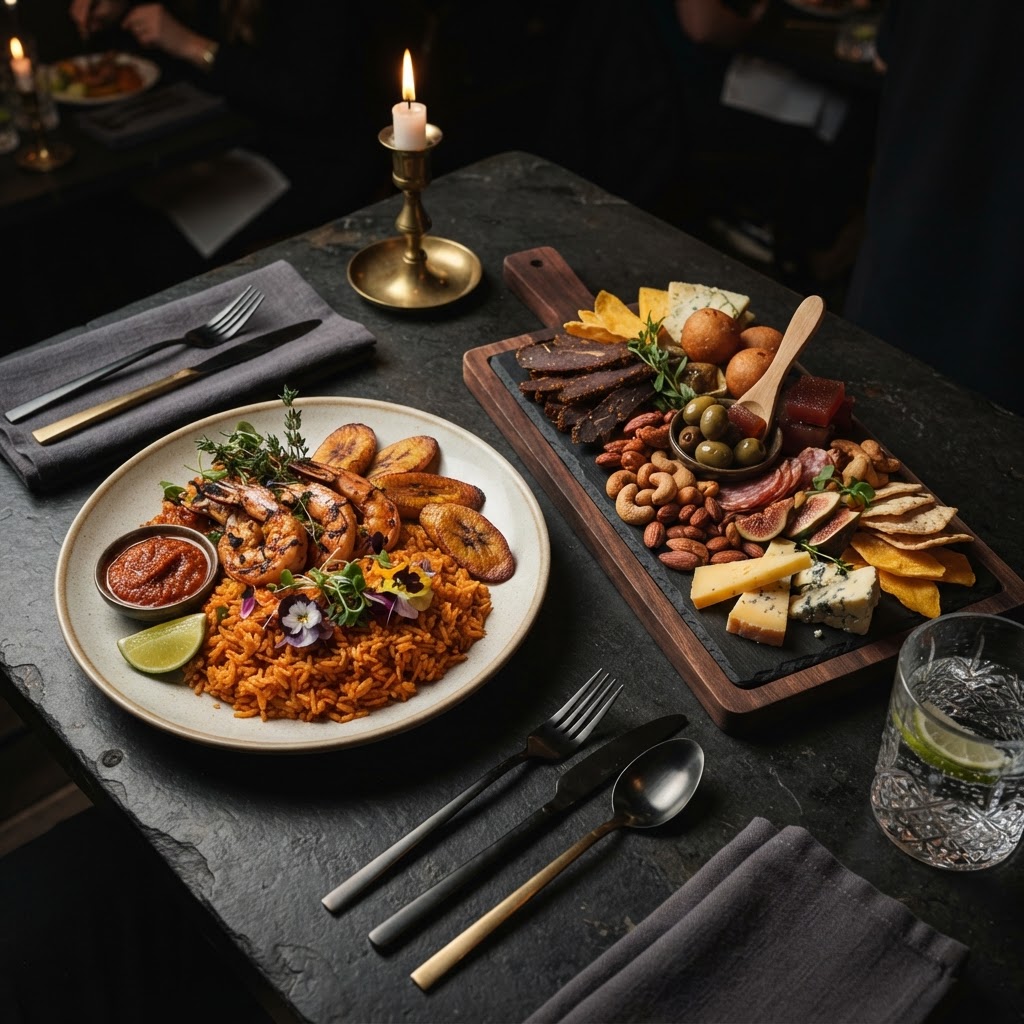
The festival's impact is measurable. One Love has introduced thousands of attendees to the food, music, and cultural traditions of the Afro-Caribbean world, building an appetite for diaspora culture that did not exist a decade ago. The dishes that anchor the festival — Jollof, curry chicken, palau — are the same dishes that anchor Afroboujie's catering menu, and their prominence at One Love proves their popularity and cultural weight in the region.
Afroboujie positions itself as the premium counterpart to the festival experience. Where One Love is the festival, Afroboujie is the VIP experience — the elevated after-party, the gourmet version of the festival food, the more intimate cultural gathering that complements the festival's scale with a different register. A guest who dances all day at One Love and then attends an Afroboujie-curated evening has experienced the full spectrum: the communal joy of the crowd and the refined pleasure of the curated room. Both are essential, and the ecosystem is stronger because both exist. Afroboujie does not compete with One Love; it completes it, offering the premium tier of a cultural moment the festival creates.
The Afroboujie Signature: The All Black Party & Beyond
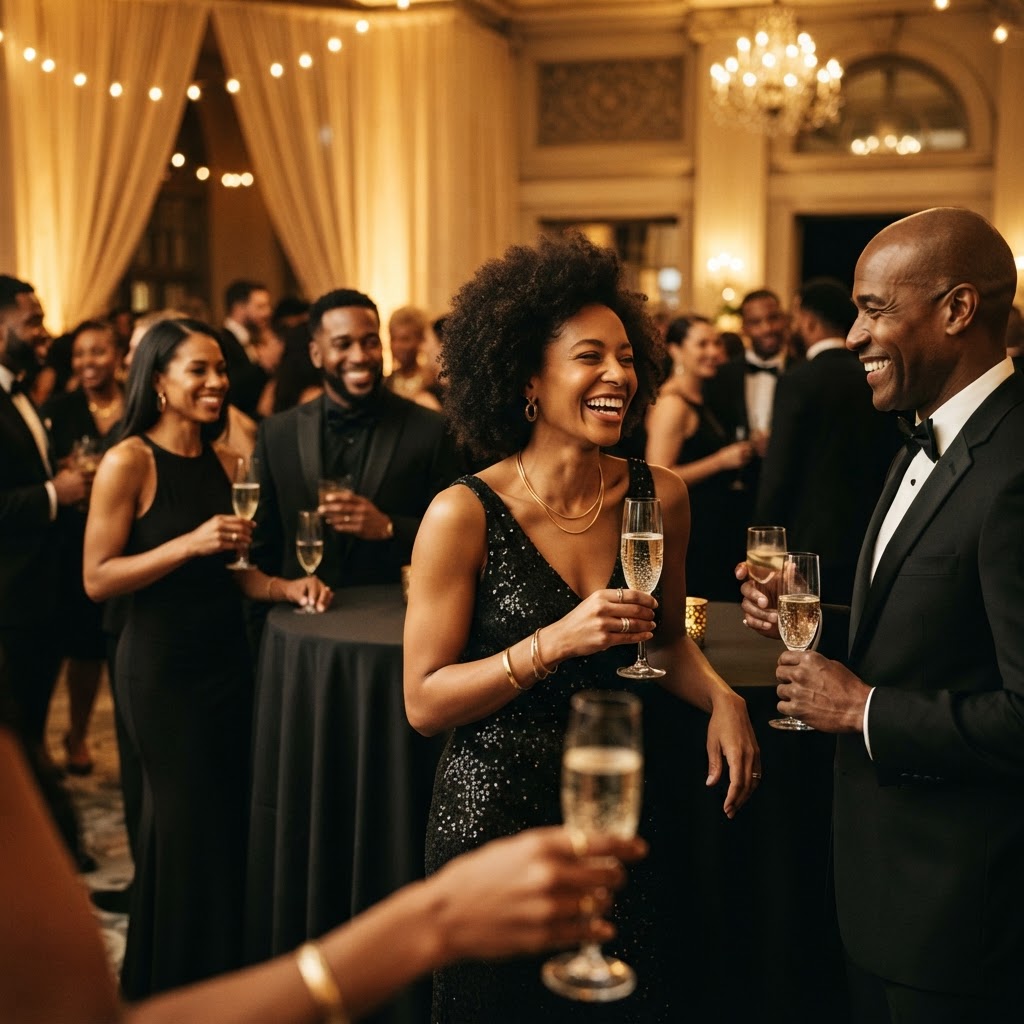
The flagship of Afroboujie's calendar is the Annual All Black Afroboujie Party, and it deserves the deep dive. The event is not your regular black party — a distinction the team makes deliberately. A regular black-themed party is a dress code; the All Black Afroboujie Party is a standard, and the difference is felt from the moment a guest arrives.
The dress code is enforced strictly — black, head to toe, with intention. The enforcement is not gatekeeping for its own sake; it is curation. When every guest arrives in black, the room becomes a canvas where individual style, silhouette, and texture do the talking, and the collective effect is striking. The photography from the event is unlike any other in the region precisely because the dress code creates a visual coherence that elevates every frame.
The production matches the dress code. Upscale bottle service is the baseline, not the upgrade. The guest list is curated — not to exclude, but to compose a room where a dentist, a filmmaker, a tech founder, and a visiting artist can all find themselves in the same conversation. The DJ is chosen for range: Afrobeats, Amapiano, and Hip-Hop woven together so that the room moves through the diaspora's sound in a single night. The lighting is layered so the dance floor pulses and the VIP lounge glows. Every element is a decision, and the decisions compound into an atmosphere that guests describe, repeatedly, as unlike anything else in Sacramento.
The All Black party is the flagship, but it is not the ceiling. The team is building toward a fuller calendar, and future events are already in development — a Boujie Carnival Fete that brings the pageantry of Trinidadian Carnival into a Sacramento venue with the production values it deserves, and a Kente New Year's Eve Gala that ushers in the new year with the textile's color and meaning as the design throughline. Each signature event is conceived not as a one-off party but as a recurring cultural anchor, a date the community can plan around year after year.
Kwanzaa Ujima & Other Cultural Pillars
Afroboujie's cultural engagement is not limited to the party calendar. The team draws year-round inspiration from the principles and traditions of the diaspora, and Kwanzaa is a central touchstone. The Kwanzaa Ujima Celebration in Sacramento's River District is a community gathering rooted in the principle of Ujima — collective work and responsibility — and it represents a model of cultural celebration that Afroboujie seeks to honor and extend.
The seven principles of Kwanzaa — the Nguzo Saba — offer a framework that extends far beyond the holiday season. Ujima, in particular, speaks to the work of building community through shared responsibility, and it is a principle Afroboujie embodies in its operations: the team supports Black-owned vendors, venues, artists, and musicians with every event it produces, understanding that a successful cultural event is also an economic event for the community it represents.
Afroboujie can incorporate these principles into year-round events, not only during the holiday season. A spring gala can honor Umoja (unity) by bringing together organizations that rarely share a room. A summer benefit can embody Kuumba (creativity) by showcasing Black artists alongside the catering. A fall dinner can practice Nia (purpose) by tying the evening's proceeds to a community initiative. The principles are not seasonal; they are a lens through which every event can be designed, and Afroboujie treats them as such.
The Future of Cultural Celebration in Sacramento
The vision ahead is ambitious and specific: building stronger year-round support for cultural tourism in Sacramento. The goal is not a single peak season but a continuous calendar — events in every quarter, each one a reason for diaspora travelers to visit the capital and for locals to deepen their engagement with the community. That continuity is what transforms a city from a place with occasional events into a true cultural destination.
The economic impact of this vision is substantial, and it cascades. When Afroboujie brings people together, it supports Black-owned vendors who supply the food, the venues that host the events, the artists whose work fills the walls, and the musicians whose sets fill the room. A well-produced, well-attended cultural event is not an isolated evening; it is an intervention in the local economy, channeling dollars toward the businesses that anchor the community. The more successful the calendar, the more robust the ecosystem it sustains.
The long-term vision positions Sacramento as a destination city for Pan-African events, mentioned in the same breath as Atlanta or London. That ambition is not aspirational fantasy; it is a plausible trajectory for a city that already has the culture, the producers, and the appetite. What it has lacked is the brand willing to hold a high standard consistently, year after year. Afroboujie is that brand, and the calendar it is building is the proof.
Celebration as Resistance, Community as Strength
The throughline of Afroboujie's entire cultural calendar is a conviction worth stating plainly: celebration is resistance, and community is strength. To gather in joy is to refuse the narrative that would reduce the diaspora to struggle alone. To throw a beautiful party is to insist that beauty is our inheritance. To support Black-owned vendors while doing it is to ensure the joy is also justice.
The call to action is a simple one: sign up for the newsletter and get early access to Afroboujie's 2026 event calendar. The All Black party, the Carnival Fete, the New Year's Eve Gala, and the full slate of curated evenings are coming, and the rooms fill fast. Join the list, mark the dates, and be in the room when Sacramento celebrates the culture in style. The community is gathering, and there is a place set for you.