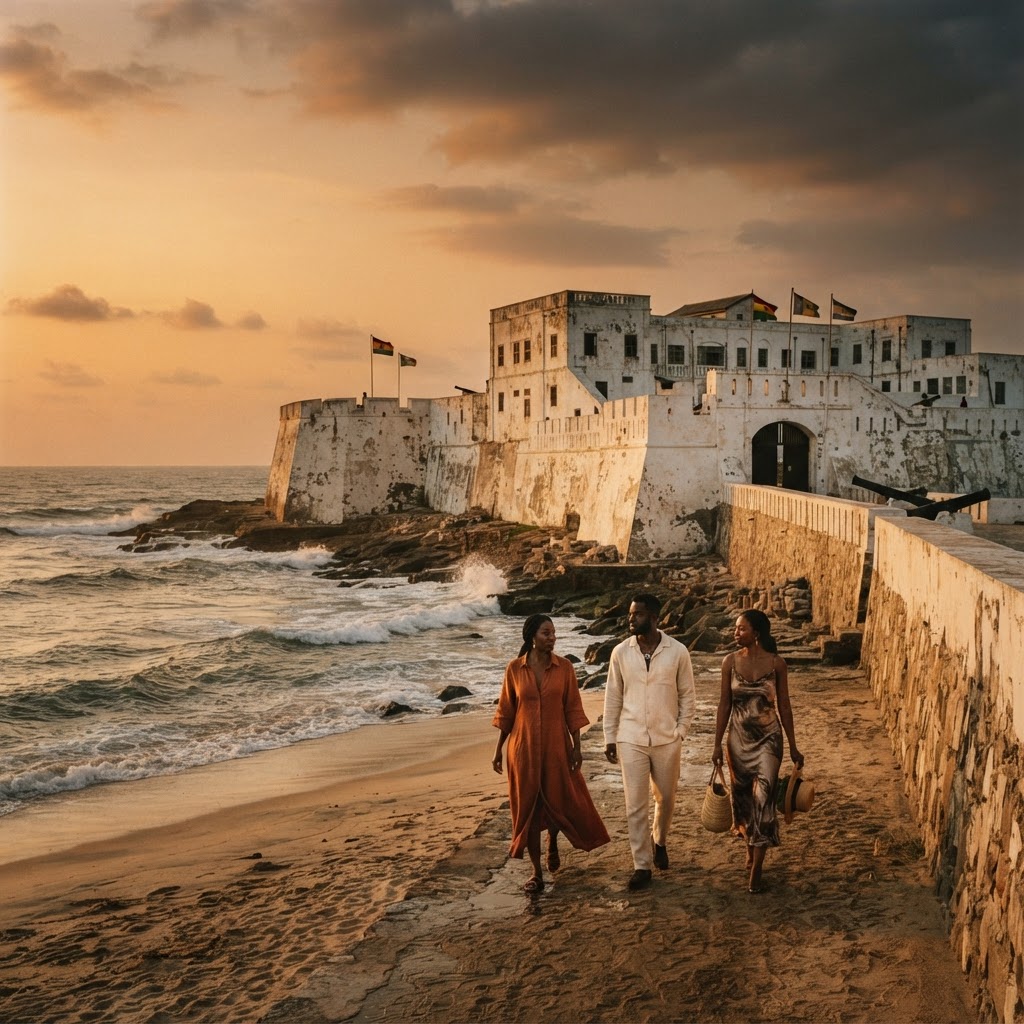
There are years that pass, and there are years that call. 2026 is the latter. Seventy years earlier, on the sixth of March 1957, Ghana became the first sub-Saharan nation to break the chain of colonial rule and raise its own flag over its own soil. Seven decades on, that anniversary lands with a weight that history has earned — not as a number on a calendar, but as an invitation. For the global African diaspora, 2026 is shaping into the most consequential moment to return home since the original Year of Return rewired the conversation in 2019.
The Year of Return, declared by Ghana to mark four hundred years since the first enslaved Africans arrived in Jamestown, Virginia, drew thousands of diasporans back to the continent for a pilgrimage of healing, celebration, and reconnection. It was, by every measure, life-changing for those who made the journey. But it was also a beginning. It proved that the diaspora would come when called, that the longing for home was not nostalgia but a living force, and that Ghana was willing and able to receive them at scale. What 2026 offers is the next chapter — a milestone rooted not in the memory of trauma but in the triumph of independence, a celebration of a nation that dared to be free and a people who keep finding their way back.
Afroboujie stands at the center of this moment as the premier curator for the diaspora's homecoming. The company has spent years producing upscale events and curating luxury lifestyle experiences, and it has turned that expertise toward the most meaningful journey it can offer: a December in Ghana designed as a living love letter to Ghana at seventy since obtaining independence in 1957. This is not tourism. This is arrival. And in a year when the eyes of the global diaspora turn toward Accra, the difference between a trip and a homecoming is exactly the difference Afroboujie exists to make.
The Historical Significance of Ghana's Independence
To understand the magnitude of 2026, you have to stand in the story of 1957. For centuries the land then known as the Gold Coast was a prize of empire — its resources extracted, its people traded, its sovereignty denied by European powers who treated the continent as a ledger of commodities. The movement that ended that era was generations in the making, built by traders, veterans returning from global wars, organizers, and thinkers who refused the logic of a world that insisted Africa could not govern itself. When Kwame Nkrumah stood on the steps of the old parliament and declared that Ghana's independence was meaningless unless it was linked with the total liberation of the African continent, he was not simply announcing a new nation. He was issuing a promise to a continent and a challenge to an empire.
Ghana's independence was the first crack in the wall of colonialism across sub-Saharan Africa, and within a decade that wall fell country by country. The nation's seventy years encompass the entire arc of post-colonial Africa — the hope, the difficulty, the rebuilding, and the resurgence. To mark seventy years is to mark a people's endurance and reinvention, the long road from the raising of a flag to the raising of a generation that travels freely, builds globally, and returns home on its own terms. It is to honor not only the political act of independence but the cultural, economic, and spiritual renaissance that followed it.
That is why the symbolism of 2026 is so precise. The Year of Return looked backward, toward the Middle Passage and the rupture that scattered a people across the Atlantic. The seventieth anniversary looks forward while honoring the foundation — toward what Ghana has built, what the diaspora has built, and what they can build together. It is the journey Afroboujie describes in its own words as a chance to honor home and history while you dance into your future. The phrasing matters. You cannot dance into a future you have not grounded in a past, and you cannot carry a past without eventually standing where it began.
Ghana at seventy is that ground. It is the castles that hold the memory, the cities that hold the energy, and the ceremonies that hold the welcome. For the diaspora traveler, arriving in 2026 is arriving at the confluence of memory and momentum — a chance to grieve what was taken, to celebrate what survived, and to invest in what comes next. It is, in the truest sense, a return to the source.
The Afroboujie Itinerary: A Deep Dive
The journey Afroboujie has built for December in Ghana is not a sampler. It is a complete, considered arc — ten days that move from the weight of history to the elevation of celebration, with VIP treatment woven through every transfer, every night, every arrival. The itinerary is the difference between visiting Ghana and being received by Ghana, and it is engineered to hold both the solemnity of the pilgrimage and the joy of the season without either compromising the other.
Ancestral Connections
The spine of the trip is the pilgrimage to the coast. Cape Coast Castle, Elmina Castle, and the Assin Manso slave river — these are the sites where, by the most widely cited reckoning, the vast majority of enslaved Africans began the journey from which there was no return. To stand in the dungeons, to pass through the Door of No Return, to wade in the river where captives took their last bath on African soil, is to confront a history that no book can fully hold. Afroboujie does not rush this. The team builds in space — for silence, for tears, for the conversations that happen afterward among travelers who have just shared something that changes how they see themselves. The castles are not a photo stop. They are the heart of the homecoming, and the itinerary treats them with the hours and the context they deserve.
Cultural Immersion
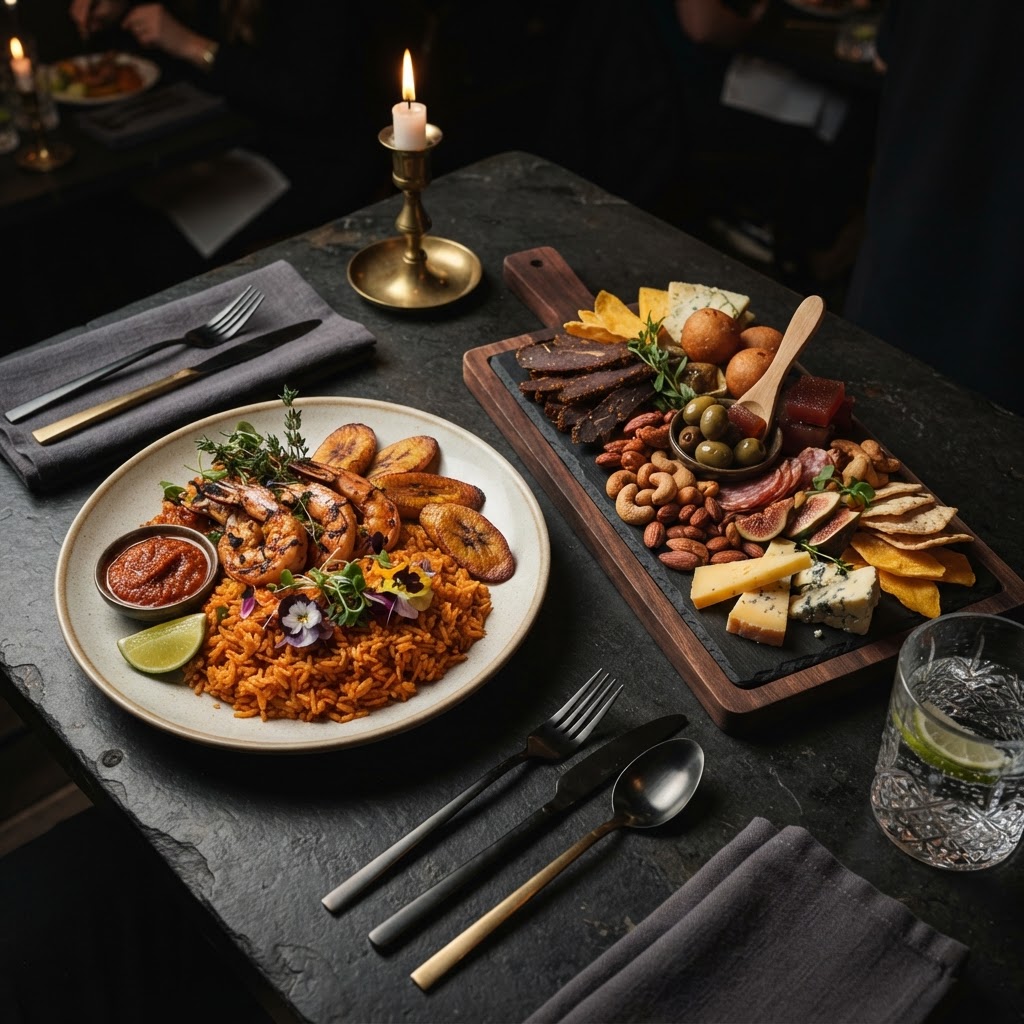
From the coast, the journey turns toward the living culture. Travelers take part in a Ghanaian naming ceremony, receiving a day name rooted in the Akan tradition and, often, a surname that ties them to a family and a place. There are Kente weaving experiences in the workshops where the cloth has been made for centuries, hands learning the rhythm of the loom. There are cooking lessons where the recipes carry their own genealogies — groundnut soups, light soups, the eternal jollof debate settled, at least for the week, in Ghana's favor. These are not demonstrations performed for tourists. They are invitations into practice, the kind of experience that leaves a traveler with a skill and a memory they will carry home and pass on.
Royal Heritage
The itinerary reaches into the Ashanti Kingdom, with travel to Kumasi and the cultural sites that hold the story of one of West Africa's most storied polities — the Manhyia Palace, the craft villages of Bonwire and Ntonso, the kente and adinkra traditions that have traveled the world. The kingdom's pageantry, protocol, and artistry offer a portrait of African governance and aesthetics that predates and outlasts colonial encounter. For diaspora travelers, it reframes what African sophistication looked like long before the world was invited to notice, and it answers, without argument, the old lie that the continent had no civilization worth the name.
Luxury and Celebration
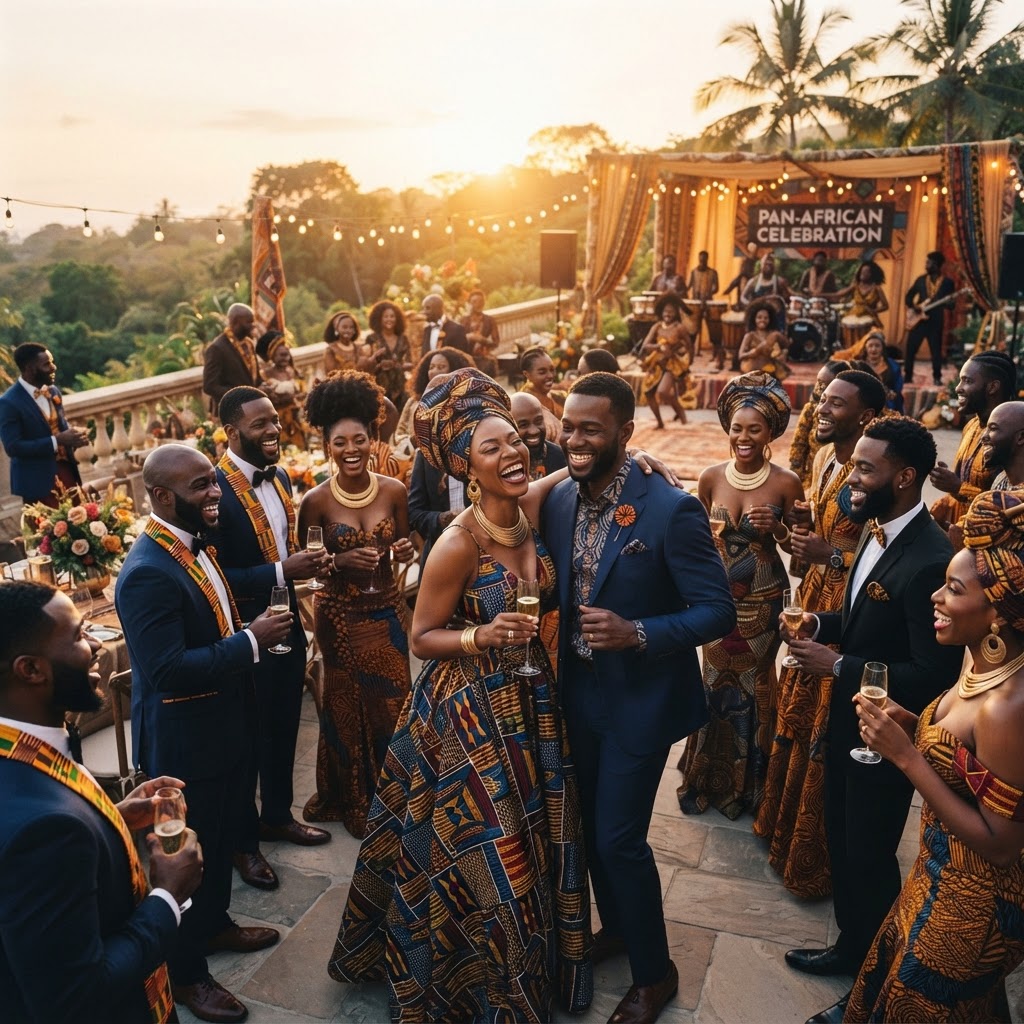
Then the journey opens into celebration. December in Ghana is unmatched, and Afroboujie's access places travelers at the center of it. Diner En Blanc Accra brings the global phenomenon of white-attired elegance to a capital that does elegance on its own terms. AfroFuture Festival — the artist-driven cultural juggernaut formerly known as Afrochella — is the gathering point for the global diaspora each December, and Afroboujie secures VIP access. New Year's Eve in Accra is its own institution, rooftop and beach-club parties running until the sun comes up over the Gulf of Guinea. The trip closes not with exhaustion but with fullness.
Throughout, the standard is uncompromising. Four- and five-star accommodations ground every night. Security escort and daily transportation are handled end to end. Visa processing is managed by the team. The promise of VIP treatment is not a phrase on a brochure; it is the operating model of the entire ten days, the difference between a traveler who endures the season and a traveler who lives it.
Detty December Goes Upscale
The phenomenon deserves its own reckoning. "Detty December" — the affectionate, unapologetic name for Ghana's month-long season of celebration — has grown into one of the most significant cultural gatherings on the planet. Each December, the global diaspora converges on Accra and its coast for a run of festivals, concerts, beach clubs, and parties that has come to define the modern diaspora social calendar. What began as a grassroots homecoming has matured into an economy and an institution, drawing travelers from London, Atlanta, Toronto, Houston, and beyond to a city that, for one month, becomes the capital of the diaspora.
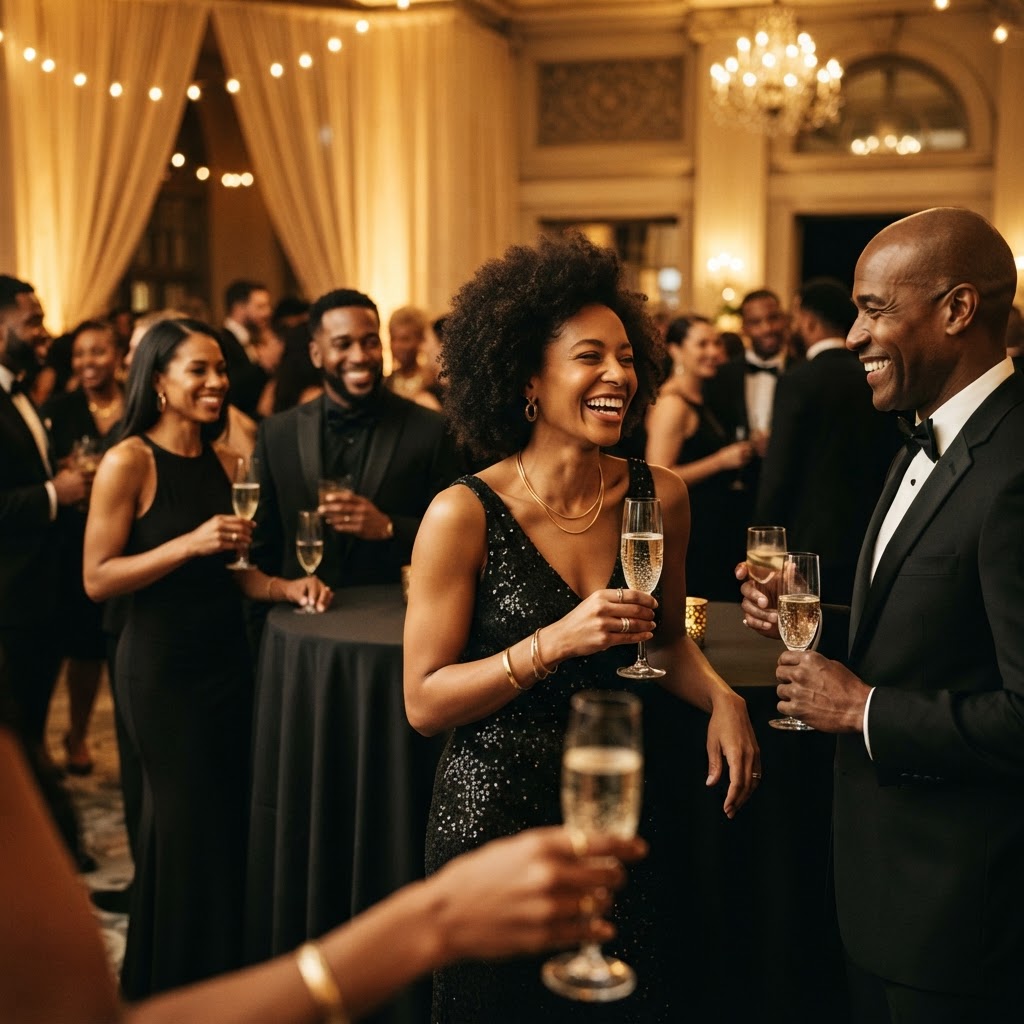
Afroboujie's contribution is the elevation of that season. The company built its name producing upscale events — the All Black parties, the curated galas, the evenings where the dress code is a standard and the room is a canvas — and it has translated that fluency directly into the Ghana experience. The December trip is not a backpacker's Detty December. It is the rooftop and beach-club tier. It is the VIP section at AfroFuture. It is the New Year's Eve party where the champagne is already waiting and the guest list is already composed.
This matters because the diaspora traveler who has worked hard enough to afford the journey deserves the journey done right. The chaos of self-arranged Detty December — the missed reservations, the unverified promoters, the transportation gaps, the evenings that should have been unforgettable but were merely exhausting — is exactly what Afroboujie eliminates. What the team sells, in part, is the certainty that the biggest nights of the year will actually land. When you are in the room, you are in the right room. When the music drops, you are on the floor. When the year turns, you are under the fireworks.
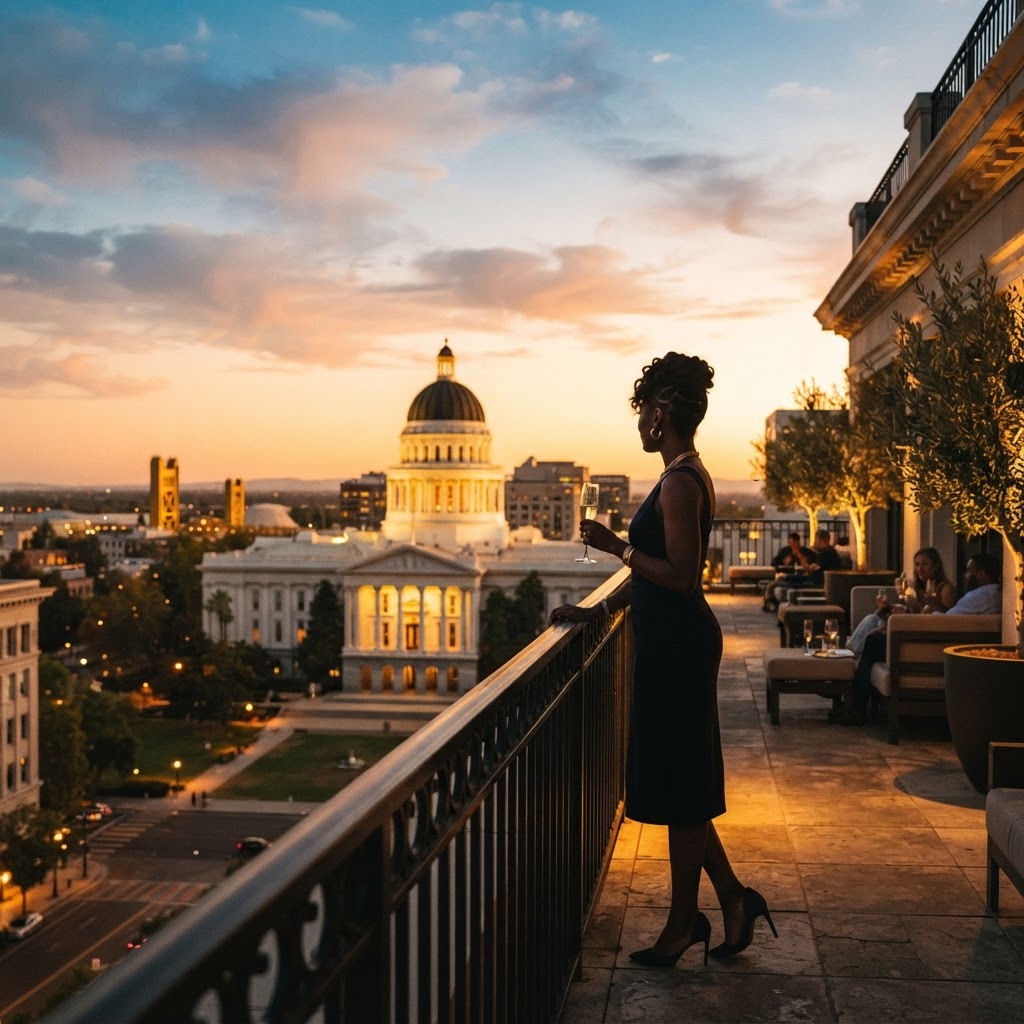
That certainty is the product of a company that produces events for a living applying its craft to the most important trip a traveler may ever take. Detty December goes upscale not by changing what it is, but by ensuring that every traveler who arrives with Afroboujie experiences its full height rather than its edges. The same standard that governs a Sacramento gala governs a rooftop in Accra, and the throughline is the team's design language, not the venue's geography.
More Than a Trip: A Homecoming
The deepest measure of this journey is the one no itinerary can list. Travelers arrive in Ghana expecting a vacation and leave understanding they have completed something closer to a pilgrimage. This is not just a trip; it is a homecoming. The distinction is felt from the moment a traveler walks through the legendary slave castles and connects with ancestral stories — and then, as the team is careful to remind, switches gears because it is not all serious stuff. The journey holds both. It makes room for grief at the Door of No Return and for joy on the dance floor the same week, because the diaspora's story has always been the holding of both.
The emotional arc is real and documented by every cohort that has gone before. There is the arrival, wide-eyed and slightly nervous. There is the coast, where the history lands in the body and the tears come without permission. There is the interior, where the culture fills the spirit and the naming ceremony gives a traveler a name they will answer to for the rest of their life. There is the celebration, where the joy becomes the evidence of survival. And there is the departure, when a traveler who left home returns home having finally understood which home was which. The phrase travelers reach for, again and again, is that they came back different.
Afroboujie's role is to make that transformation accessible. The practical care matters as much as the curation. Visa processing is handled by the team, removing one of the most common barriers to diaspora travel. Travel insurance is recommended and the guidance is clear, so the journey is protected. And for solo travelers who want to share the cost and the experience, Afroboujie extends each traveler the option of being paired with a suitable roommate at no additional cost — a service that has turned strangers into lifelong friends and made the trip possible for travelers who would not have come alone. Every one of these decisions is a door held open. The homecoming should not be reserved for those who can navigate the logistics alone; it should be available to anyone willing to answer the call.
Conclusion: Answering the Call
2026 will not come again. Seventy years of independence is a once-in-a-generation threshold, and the diaspora that shows up for it will be the diaspora that history remembers. Ghana is ready. The castles are open, the festivals are staged, the city is lit, and the welcome — that particular Ghanaian welcome, warm and unhurried and complete — is waiting.
Afroboujie has built the journey. The ten days are mapped, the rooms are reserved, the access is secured, and the team that has produced a decade of unforgettable nights is ready to produce the most meaningful one yet. The only question left is whether you will be in the room.
Be part of history. Book the December 2026 trip, bring the people you love, and come home for the seventieth. Ghana is calling, and this time, the call is for you.